SAN MIGUEL - Off to the Swamps
Published on Anja Tags: San-MiguelArgentinienDorfPorträtNatur

Accommodation
Our accommodation was very good. Every day there was a basket with cake (cocoa and orange) and a bit of fruit (not super fresh but we are in a swamp ;) Moreover, you could make tea or coffee with sugar and milk powder. Coffee maker, containers, and dishes were set up in the room, only the cake was brought daily. The tap water was not drinkable, so we had to carry canisters for the first time in a long time. Why might that be? We're practically sitting next to a freshwater reservoir.
Here is a small anecdote from Pascal's point of view:
On day one after our arrival, Anja wanted to make coffee - the first time with a drip coffee maker. She even called her mother extra to make sure nothing went wrong. All that came about, however, was a very loud, very horrified scream. I first thought she has scalded herself, but the evil turned out to be a little frog that had made itself comfortable in the water tank of the coffee maker :D

Sights
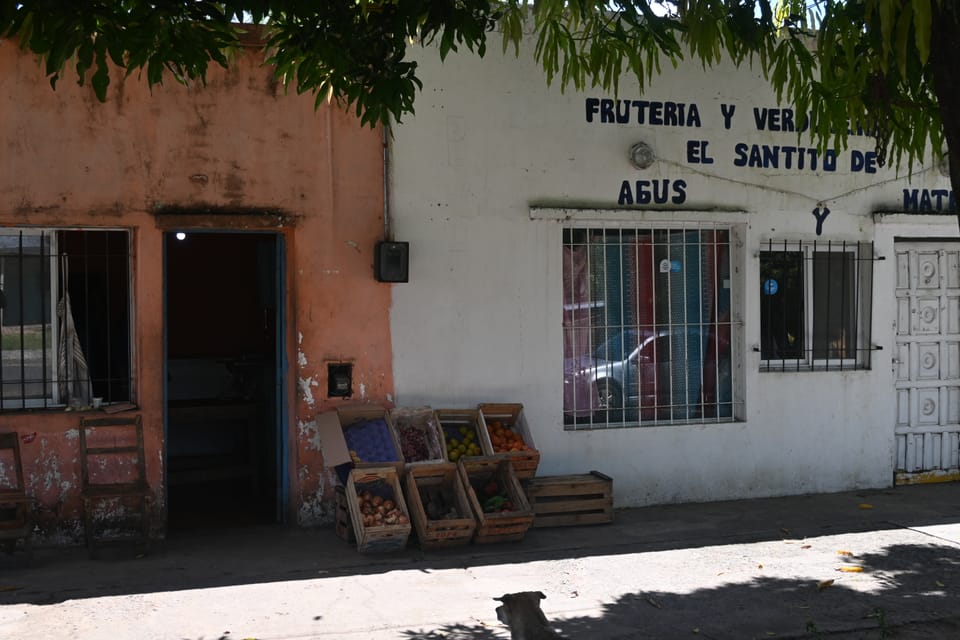
In the city, you can take a small walk: First to Laguna Sevo'i (Patrimonio de San Miguel), then to the Monumento a Remigio Fernandez, who fought for the Falkland Islands, and past the Casa del Artesano to Plaza 25 de Mayo. In the artist's house, there are all sorts of special handmade things at affordable prices, such as tea, leather belts, leather bags, woven baskets, and decoration. Everything comes from the Corrientes region. At Plaza 25 de Mayo there are some statues and also a cooking station for the popular Mate. Opposite is the Catholic Iglesia San Miguel Arcángel, which was well-attended for the service on Sunday. What I unfortunately didn't see was the local Balneario "Cacique ira". It is a public swimming place or lake. And now we come to the reason why we are in San Miguel. The National Park "Esteros del Iberá", a real insider tip. When I read up on the internet, it was actually clear to me that we wanted to go to Colonia Carlos Pellegrini. But when we then saw the room prices on Airbnb and booking.com, we were suddenly not so sure. The other options were:
- San Miguel (even with four accommodations to choose from),
- Concepción (but there is only a campground here), and
- Ituzaingó (this city was a bit too impersonal for me).
So we chose San Miguel (after a small misbooking, which was not our fault). Getting there was rather difficult, but our host Rocio supported us wonderfully. From San Miguel, it's 27 km to the entrance or the Entrada San Nicolás.
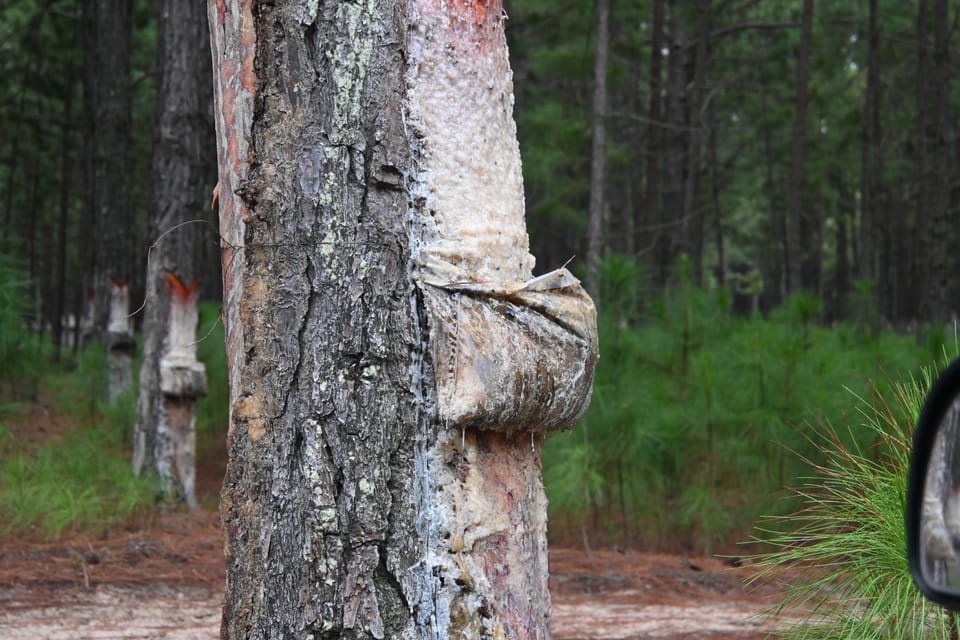
- makeup
- paints
- plastics
- hair removal cream
The tree grows for ten to fifteen years, after which it can be used for another ten to fifteen years and is then cut down for the paper industry. The trees are equipped with a bag into which the resin can run. When Pascal tells Hernan that "the trees are crying", Hernan replies that this place would be good for a horror film. Understandable, why.
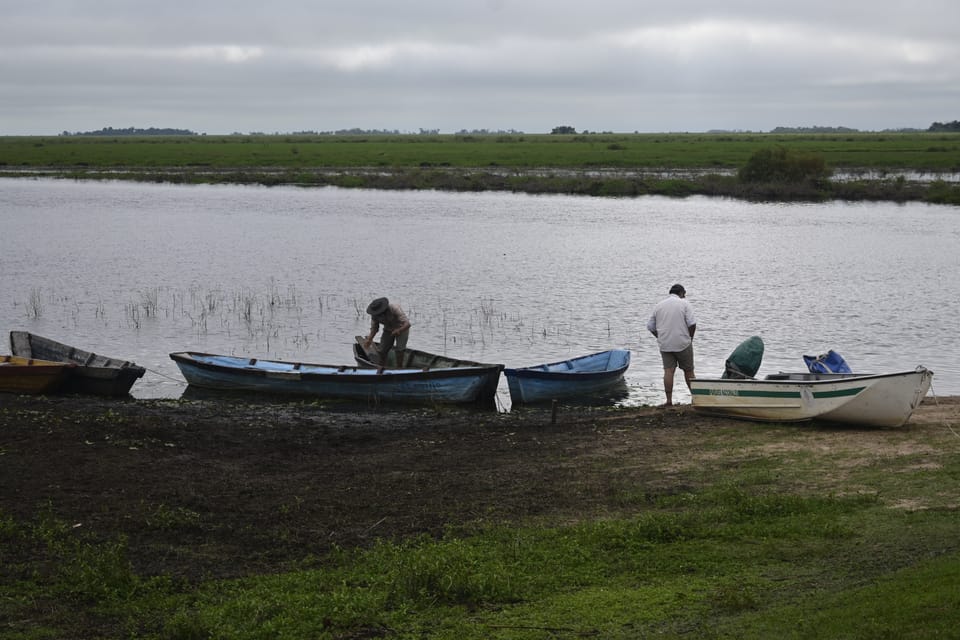
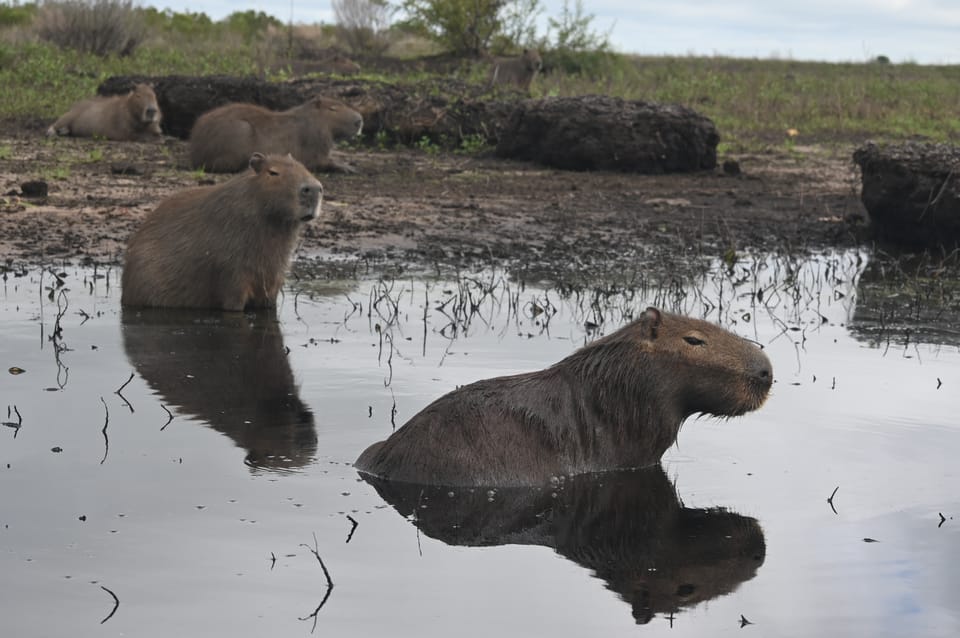
- Source: Universes in Universe The National Park is made up of
- Lagoons
- Marshes
- Grasslands
- Palm groves
- Dry savannahs
- Wet forests
- "Bañados", i.e., temporarily flooded areas
- "Embalsados" or "Camalotes", mats of floating vegetation (formed when humus collects at the water surface, seeds germinate on these "carpets", and subsequently, a firmly overgrown plate with bushes and trees, etc., is formed) Here are a few historical details:
- 1950s: Death of the last free-living jaguar in the Corrientes region over 70 years ago
- 1970s: Almost complete eradication of the fauna through hunting, cattle ranching, and fertilizer-intensive rice cultivation
- 1983: Nature park, the area is under protection, hunting is banned
- 1993: Provincial park
- Early 1990s: Doug Tompkins (founder of The Northface and Esprit) and his wife Kristine Tompkins (former CEO of Patagonia) buy lands worth millions with the aim of protecting these areas in the long term. They are the founders of the "Conservation Land Trust – Argentina" foundation.
- 2007: Reintroduction of certain animal species: Giant anteater, tapir, collared peccary, pampas deer, ocelot, giant otter, and jaguar
- 2015: Establishment of a jaguar enclosure in the center of Iberá by the "Rewilding Argentina" foundation
- 2015: Doug Tompkins passes away, and his wife Kristine Tompkins donates large lands to Argentina, with the stipulation to establish a national park for 99 years
- 2018: National Park, appointment of a 1570 km² area by Congress in Buenos Aires; The land belongs to the Argentine state; the reintroduction projects continue to be part of the "Conservation Land Trust – Argentina" foundation
- 2021: Birth of two young animals, they are together with their mother the first jaguars to roam freely in the National Park in a long time And here is an overview of the different areas once again:
- Nature Park: 1,300,000 hectares (which coincide with the boundaries of the basin of the Iberá wetlands and also include privately owned areas).
- Provincial Park: 550,000 hectares.
- National Park: 183,000 hectares. From the beginning, numerous individuals have been working on restoring the original ecological state and the ecological balance associated with it:
- Authorities
- Foundations
- Conservation Land Trust
- Flora and Fauna Argentina
- Conservation Wildlife Trust
- NGOs
- Research centers
- Civilians
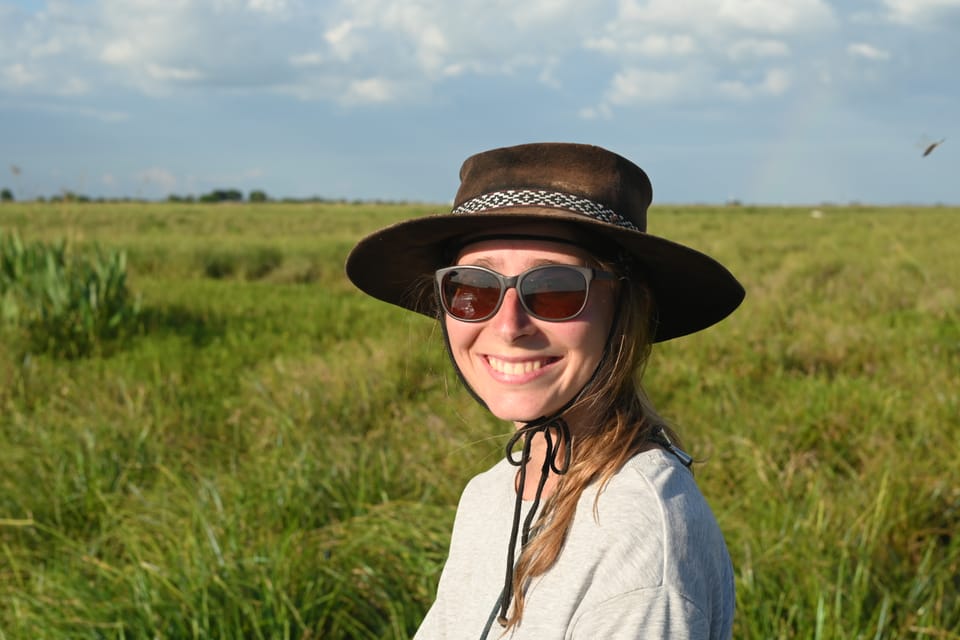
Okay, that's enough about that :) The day after, we took a horse ride with Kiko. Hernan was kind enough to arrange the contact for us. For our "Cabalgata", we met at 5:30 PM on his property. Moritz decided to join us very spontaneously and beforehand we made a detour to "Casa del Artesano". At Kiko's, I borrowed a real Gaucho hat and we applied some mosquito repellent.
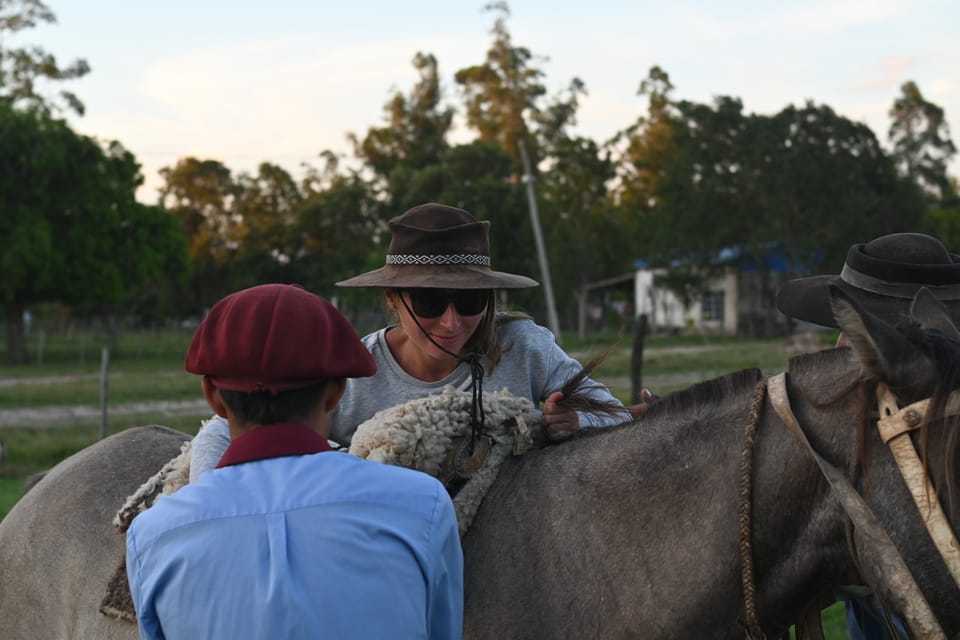
- Anja with Paloma (13 years old)
- Pascal with Sepillo (4 years old)
- Moritz with Tostado (10 years old)
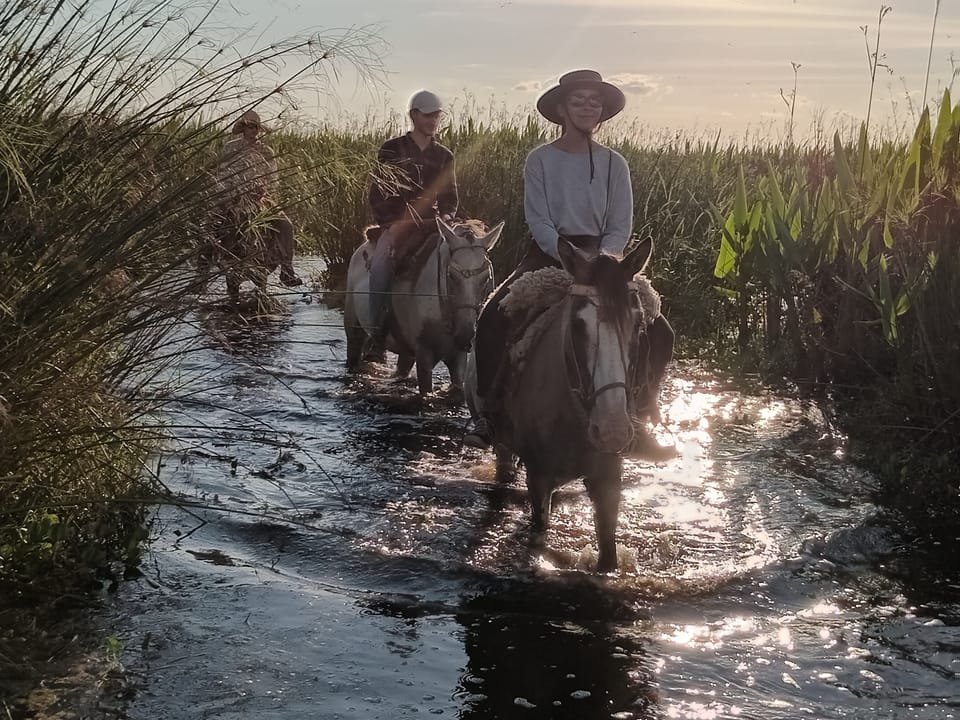
These are "Criollos de la Zona", a typical horse breed from the Corrientes region. Kiko owns a total of 26 horses, 15 of which are intended for tourism or rides and 6 for working with the cattle. We rode for about 2 hours and 20 minutes and saw exciting things along the way: avocado trees (we were also allowed to take three unripe avocados with us, which can ripen during the trip), mango trees, and monkeys. Unfortunately, we didn't see the howler monkeys, but we heard them :) Kiko told us a bit about his everyday life; three days a week he works as a gaucho on a ranch and looks after 70 cattle; the rest of the time he goes on trips with the horses. Both locals from San Miguel and tourists ride with him. He referred to earning money as a gaucho as "medio difícil”. The horses go through a year and a half of riding training and after two to three months of working with the cattle they are ready for regular work. The further we go, the more beautiful the light conditions become. Kiko and his son, who accompanied us and wore the typical gaucho clothing, took pictures of us during the ride and he also took water with him for us - full service! <3 The last part then also went through deep water. Only Pascal didn't have wet feet afterwards. The whole thing was over much too quickly. A wonderful excursion on the hundredth day of our journey.


Transportation
Everything here is within walking distance. The locals all drive around the area with their scooters or motorcycles. It's even common for a whole family of four to be on one scooter. All AT ONCE and then without a helmet. Sometimes you would also see someone on their horse.
Food and Drink
At Comedor Karuha, there was delicious and cheap food. For a large burger with fries, I paid 3500 pesos; for a pizza 4800 pesos. On the go, we bought two large schnitzel sandwiches for a total of 3500 pesos. It was actually a gig piece, but it was halved at our request.
Cafes and Restaurants
Comedor Karuha
Plants and Animals
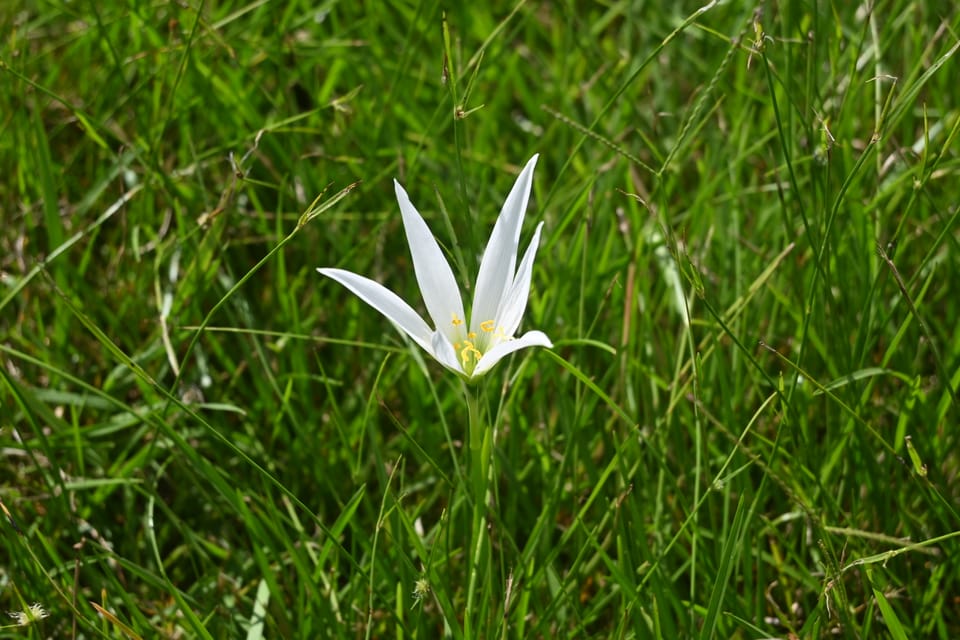
Oh, there is so much to see here <3 I am totally taken away.
Of course, Roci's adorable dog "Guaina” has to be mentioned first. "Guaina" means "woman" in the native language. He says, "it's a common way to call girls”. Hernan adds, that the word "Chica” is not really used in Corrientes, it is replaced equivalent by "Guaina”. Guaina is two months old, a mixture of pitbull and (probably) boxer and loves to bite into things. For example, into my hand;) So so cute.

- Grey Cardinal or Red-headed Tangerine (Cardenal copete rojo or Paroaria coronata)
- Red-headed Starling (Federal or Amblyramphus holosericeus)
- Cormorant (Biguá o Cormorán negro or Phalacrocorax brasilianus)
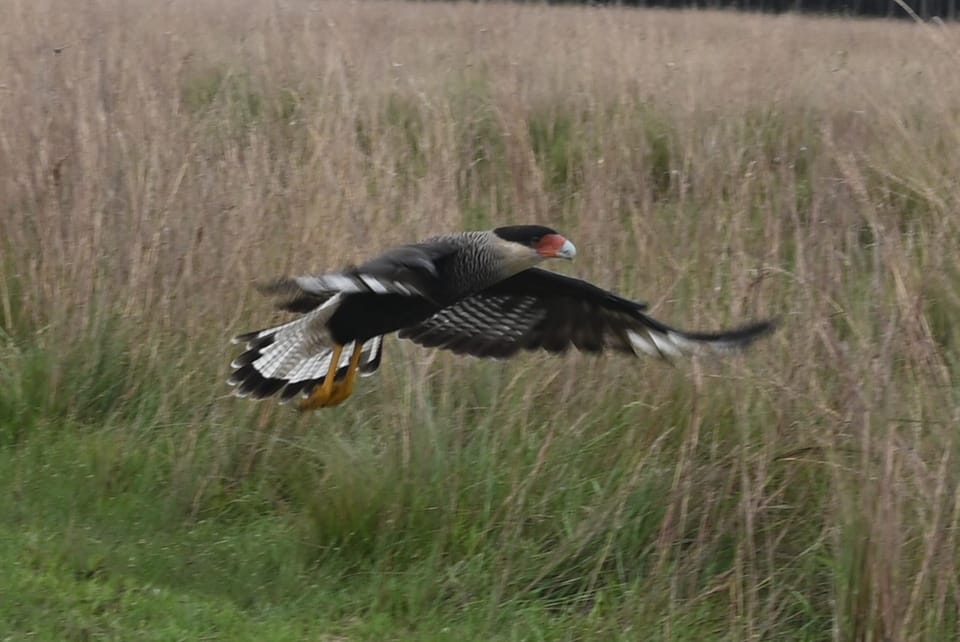
- Harris's Hawk (Gavilán mixto or Parabuteo unicinctus)
- Southern Screamer (Chajá or Chauna torquata; named because its song sounds like "¡vamos! ¡vamos!")
- Vulture (Jote Cabeza Negra or Amarilla or Coragyps atratus or Cathartes burrovianus)
- Jabiru (Jabiru mycteria; up to 1.40 m tall and the world's second largest flying bird)
- Maguari Stork (Cigüeña americana or Cigüeña maguari or Ciconia maguari)
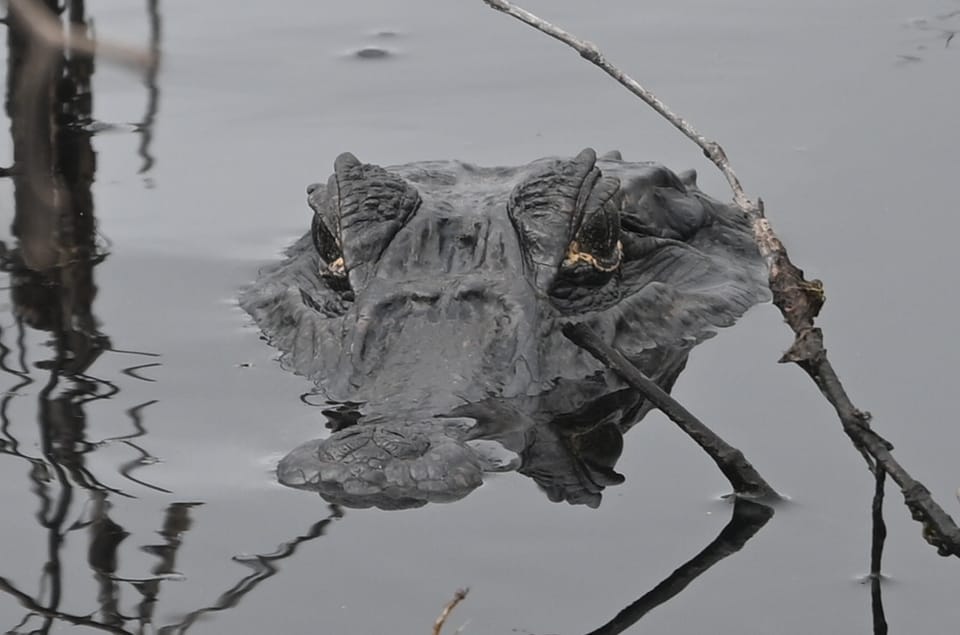
- Spectacled Caiman (Yacaré negro or Caiman yacare)
- Marsh Deer (Ciervo de los pantanos or Blastocerus dichotomus) At the campsite, we then saw a lizard named "Lagarto Overo", also called "Black and White Tegu" (Salvator merianae). During our ride with Kiko, we were also able to hear howler monkeys, but unfortunately not see them (Mono Carayá or Alouatta caraya). What we couldn't discover were:
- Crab-eating Raccoon (Aguará Popé or Procyon cancrivorus)
- Maned Wolf (Lobo de crin or Chrysocyon brachyurus)
- Wild Cat (Gato Montés or Felis silvestris)
- Urutu (Yarará or bothrops alternatus; most poisonous snake in Argentina)
- Giant Anteater (Oso Hormiguero Gigante or Myrmecophaga tridactyla)
- Giant Otter (Lobo Gargantilla or Nutria Gigante or Pteronura brasiliensis)
- South American Tapir (Tapir Amazónico o Mboreví or Tapirus terrestris)
- Jaguar (Yaguareté or Panthera onca)
- Red-green Macaw, Green-winged Macaw
- Collared Peccary, White-lipped Peccary
- Jaguars: nationalgeographic.de
- Plants and animals: trekkingchile.com
- Rewilding: rewildingargentina.org (Spanish) and youtube.com What would also have been interesting: Parque Nacional Mburucuyá


Number of Germans in the City
1
Contact with Locals
With Hernan and Rocio (our guide and our host). Hernan also lives in the same building complex as our room. As tourists, we stood out quite a bit among the locals and we were also watched like moon calves sometimes ;D
People We Met
During our tour with Hernan, we met Moritz. He comes from Amberg and is doing something of the opposite of our route. Ground roughly covering Peru, Bolivia, Argentina, Brazil, Uruguay, Argentina, and finally Chile.
Expenses
We paid 70,000 Pesos per person for our safari tour. For our horseback riding trip, 7,000 Pesos per person - really cheap. If we had stayed longer, I probably would have participated a second time;) Then I bought in "Casa del Artesano"
- Two packs of loose tea for 500 Pesos each (Cola de Caballo and Burrito)
- Two belts (6,000 and 9,000 Pesos)
- Leather case for credit cards as a gift for Pascal (the leather comes from the Corrientes region, price will not be revealed)

Standard market offer
There are no stands here, but leather goods were sold at the bus stop. We chose two keyrings with animal motifs for 1,500 Pesos each. In addition, one of the kiosks also sold the typical Gaucho outfit including hat, jacket, trousers and the slippers typical for the Corrientes region. Almost every man here has the slippers. The hat, for example, would have cost 13,000 Pesos, the trousers 35,000 Pesos.
Laundry
Unfortunately, we had to stink, as there was no laundry in town...
Unsolved Mysteries
How did this frog get into the coffee machine???
Bus travel to Puerto Iguazú
To get to Puerto Iguazú, we had three options:
Option Number 1
- From San Miguel (3:00) to Posadas 6:15 with Silvia
- From Posadas (6:30/10:15/...) to Puerto Iguazú (12:00/15:00/...) with Cruzero del Norte
- From Posadas (7:15/9:20/...) to Puerto Iguazú (11:55/14/30/...) with Rio Uruguay
Option Number 2
- From San Miguel (4:45/12:45) to Corrientes with Rapido Bus
- From Corrientes (9:00/14:30) to Puerto Iguazú (17:21/23:55) with Rio Uruguay
Option Number 3
- From San Miguel (8:30) to Ituzaingó with Rapido Bus
- From Ituzaingó (12:00/17:25) to Puerto Iguazú (17:21/23:55) with Rio Uruguay We chose Option Number 3 (since this bus didn't leave until 8:30) and paid
- 8,000 Pesos per person from San Miguel to Ituzaingó
- 17,500 Pesos per person from Ituzaingó to Puerto Iguazú

Here's a little interview with our tour guide Hernan:
Anja:
¿Cuántos años ya eres un guía?
Hernan:
trabajo en iberá desde el año 2017, pero ya lo conocia desde el 2014, no empecé como guía, empecé ayudando en la logística de las excursiones que vendía una agencia en ese momento, y de a poco fui adquiriendo conocimientos y las herramientas necesarias para hoy poder ofrecer una experiencia distinta a las demás y que ustedes lo puedan vivir y disfrutar de una manera diferente, el emprendimiento de la tata en yvera ya va por su tercer año🤞🏽
Anja:
¿Has hecho un educación / un curso como guía? ¿O sabes tanto porque estás de la región?
Hernan:
tuve la posibilidad de conocer a quien hoy es un amigo mio, que es guardaparques de la provincia de corrientes, el me compartió muchos conocimientos sobre el lugar, su flora y su fauna, ahora que tengo mi propio emprendimiento tengo que asistir constantemente a capacitaciones sobre distintos temas que están dentro de la experiencia que nosotros hacemos, ejemplo: curso de guía de kayak, curso de técnicas de guiado, curso de primeros auxilios en lugares agrestes, entre otros.... También como trabajo en el campo tuve la posibilidad de adquirir conocimientos de mis abuelos sobre por ejemplo como darme cuenta si va a llover o no, identificar el canto de algunas aves, entre otras cosas....
Translated:
Anja:
How many years have you been a guide?
Hernan:
I've been working in Iberá since 2017, but I've known it since 2014, I didn't start as a guide, I began by helping with the logistics of the excursions that were being sold by an agency at the time, and over time I've gained the knowledge and necessary skills to be able to offer an experience that is different from the others, to allow you to live and enjoy it in a different way. The Tata enterprise in Yvera is now in its third year🤞🏽.
Anja:
Did you get an education / do a course as a guide? Or do you know so much because you're from the region?
Hernan:
I had the opportunity to meet a friend of mine, who is now a park ranger in the province of Corrientes. He shared a lot of knowledge with me about the area, its flora and fauna. Now that I have my own business, I constantly have to attend training sessions on various topics that are part of the experience we offer, such as: kayak guide course, guide techniques course, first aid in wilderness locations course, among others.... Also, since I work in the countryside, I had the opportunity to acquire knowledge from my grandparents, such as how to tell if it's going to rain or not, how to identify the song of certain birds, and much more....
Post Scriptum
Pictures of the swamp and what else we saw can be found at https://hoenisch.eu/photo/mo/sharing/lOzEbWrBe.