PUERTO IGUAZU - Impressive Waterfalls
Published on Anja Tags: Puerto IguazuArgentinienStadtPorträt

Accommodation
We don't say anything about the accommodation at this point. Just this much: quite a lot went wrong (not our fault), and it ended with us being kicked out of the house. Well, we survived it.
SIM Card
We have never experienced such poor internet in a city before. Even in the swamps, the reception was better. For our day trip to Ciudad del Este in Paraguay, we got two SIM cards from Personal. These were linked again with our ID cards. We each paid 30,000 Guarani (3.80 Euros) for 6 GB for 15 days.
Sights
In Puerto Iguazú, we didn't actually look at much. The place probably only exists to accommodate waterfall tourists.
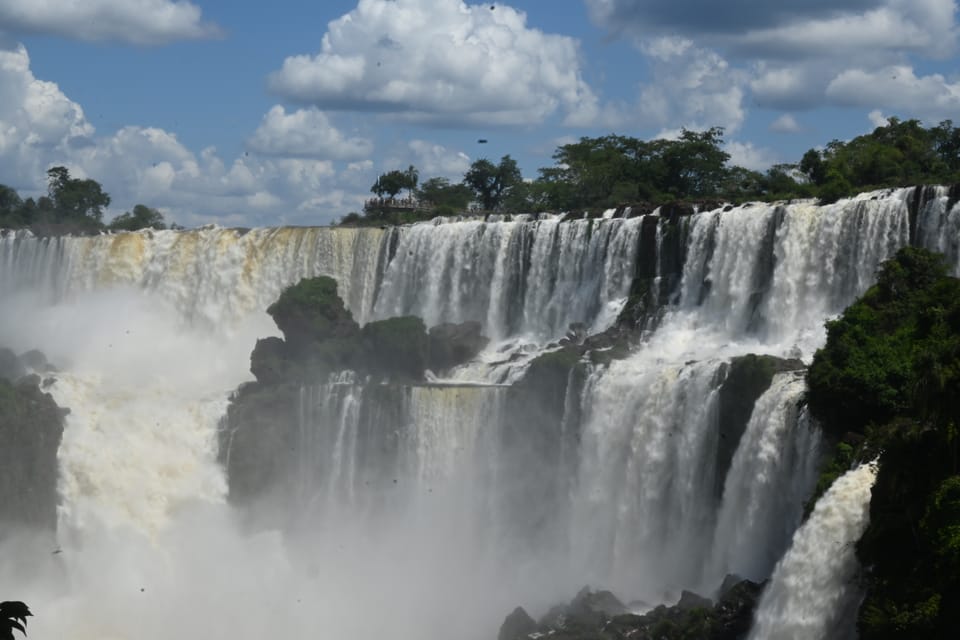
"The Iguazu Falls, along with Niagara Falls in Canada and Victoria Falls in Zimbabwe, are the largest and most powerful waterfalls on earth," says our favorite blogger Daniel. They are also called "Cataratas" and are located directly on the border between the state of Paraná in Brazil and the province of Misiones in Argentina. Their name translates as "big water". Additionally, they have been one of the new seven wonders of the world since 2011 and have been recognized as "World Natural Heritage for today and future generations" since 2013. There are 20 large and 255 small waterfalls that are between 82 and 64 meters high. Really gigantic amounts of water come down. The largest of the waterfalls is called "Garganta del Diablo" or Devil's Throat. In a U-shaped bay, the water first flows into the Rio Iguazu and then into the Rio Paraná. The water probably used to be very clear (a so-called clearwater river), but today the water is partly brown and sediment-rich due to the deforestation of the Brazilian rain forest and the associated erosion.
You can approach the Devil's Throat from both sides. On the Brazilian side, there is a footbridge that is "at the lower end" and approximately 600 m long.


- a lime for my bites for 1,000 Guarani (= 0.13 Euros)
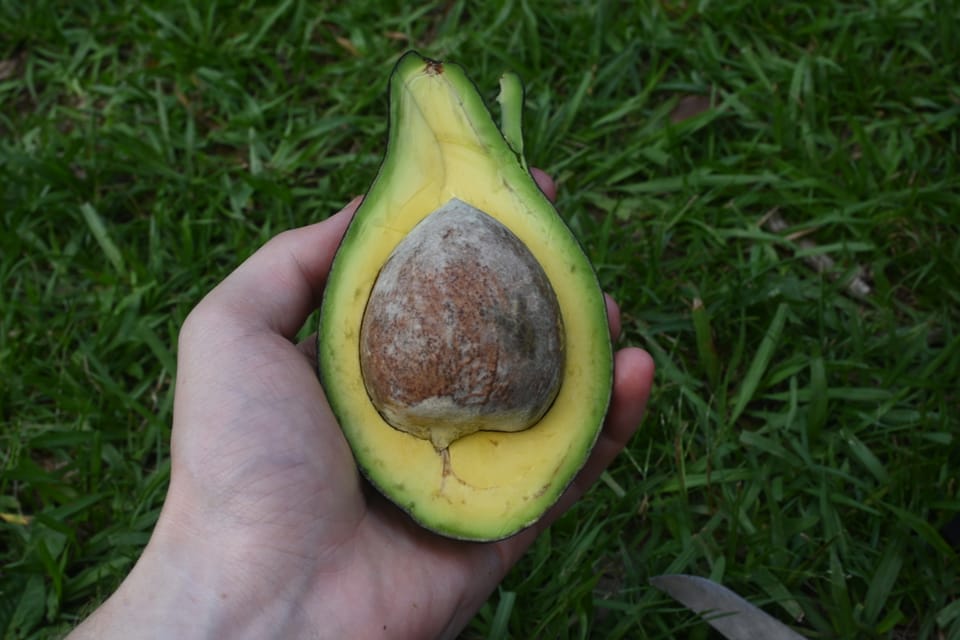
- four gigantic avocados for 10,000 Guarani (= 1.30 Euros)
- Shawarma for Pascal for 22,000 Guarani (= 2.80 Euros)
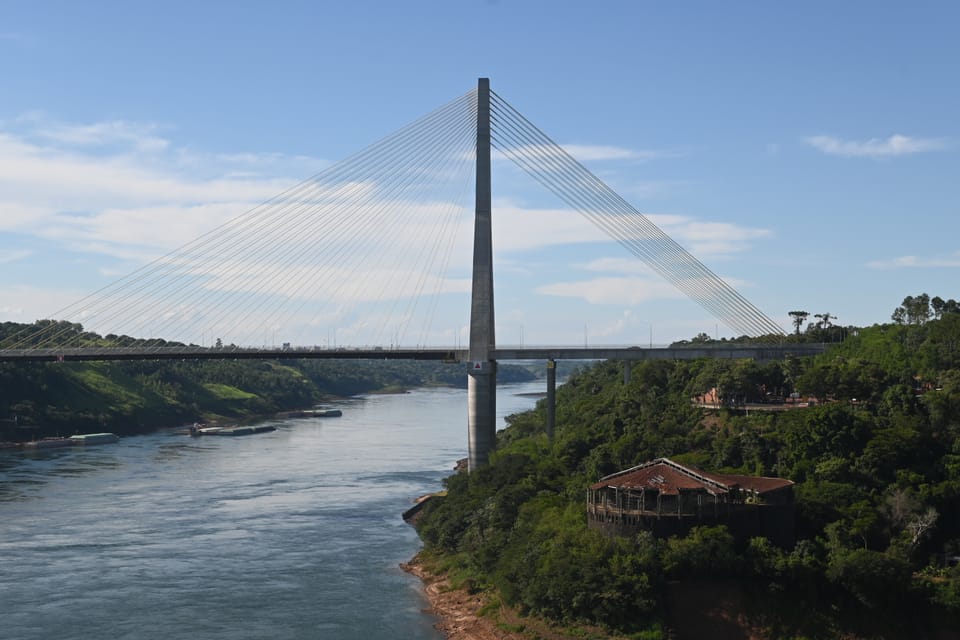
Normally, this would go into the "Expenses" category, but you usually only go to Ciudad del Este to shop. There's not much else there. We unfortunately didn't look at the Itaipú Dam and Salto Cristal due to the long travel time.
The trip to Ciudad del Este with Cruzero del Norte cost 2,500 pesos per person, the return trip with Rio Uruguay 3,000 pesos per person.

Transportation
Within Puerto Iguazú, we took the village bus that runs once an hour (Price: 450 Pesos per person). Additionally, our landlords also acted as drivers twice. Finally, on the last day, we took a taxi for 5000 Pesos, allowing us to catch an earlier bus to Asunción. Once, a kind inhabitant of Puerto Iguazú, Maxi, also helped us. We were looking for a Western Union, and the first one did not disburse money on certain days. He drove us to a total of five different WU branches, and we somehow thought that he wanted to rob us afterwards or something ;D We thought wrong, he bought us water and gummy bears, and in the end, he even wanted to give us 20000 Pesos. Well, there we wrongly judged someone. The quintessence was that we had to withdraw money with my VR card at Santander. Pascal had AGAIN left the credit card at home. For 30000 Pesos, we paid a fee of 8750 Pesos. Not to mention the crappy exchange rate.

Food and Drink
We went to a restaurant once and to a cafe twice. At "Color Parilla & Pizza" we would have even got a 20% discount, but we were somehow too bemused to ask. We had Mate cocido, spaghetti with tomato sauce, and for me (I ordered this by accident, I thought I was going to drop dead) beef small intestine. Well, I couldn't return it anymore. Then I just ate it (with Pascal's help), I had no other choice. It was interesting that there were no sides or sauces. Just a half grilled tomato with a bit of parmesan on top. Then we escaped the bad internet twice and did some work in the cafe. At "El Pan de la Abuela" we ordered
- a combo called "Saltos San Martin" for just under 4000 Pesos
- Latte de Vainilla con Miel
- Jugo de Naranja
- Two Medialunas con Jamón y Queso
- a hot chocolate
- a Dulce-de-Leche chocolate cake for just under 2000 Pesos
- a very tasty juice consisting of Frutos Rojos y Naranja for just under 2000 Pesos (I even ordered this twice)
- a burger with fries for about 6500 Pesos.
Everything was quite tasty, we rate it four out of five stars.
In Ciudad del Este, we went to "Shawarma El Sultán - Comida Arabe". They served a modified version of Shawarma with an interesting filling. Even french fries were included. But really delicious!

Cafes and Restaurants
- Color Parilla & Pizza
- El Pan de la Abuela
- Shawarma El Sultán - Comida Arabe (Ciudad del Este)
Plants and Animals
We saw cute Capuchin monkeys (including a monkey baby!!!) at the Iguazú Waterfalls as well as many, many butterflies, including "Mariposa de los naranjos" or Papilio thoas and "Erato" or Hiliconius erato. We also saw the Williams South American Sideneck Turtle "Tortuga herradura" or Phrynops williamsi. This turtle belongs to the Toad Head Turtle family. And of course we must not forget the South American coatis.

Number of Germans in the City
3 (Moritz from San Miguel, who we saw again at the Cataratas) and two older ladies
Contact with Locals
Only with our hosts and Maxi
People Met
Our hosts
Expenses
We paid quite a lot for our two tours. Brazil:
- Transportation: 3000 Pesos per person per trip
- Admission: 100 R$ or 19 Euros per person (easily payable by credit card) Argentina:
- Transportation: 2500 Pesos per person per trip
- Admission: 20000 Pesos per person
This brings us to a total of about 100 Euros for the two days. The whole thing was relatively straightforward. We had no bus binding with Rio Uruguay and could pay on site with cash or credit card. The buses to the Argentine Cataratas leave every 15 minutes, but the ones to the Brazilian side only every 60 minutes. On the Brazilian side, everything went super fast at the cash registers, on the Argentinean side, we had to wait in line forever, as only one of the six cash registers was open.

Standard Stand Offer
Wooden figures, fans, waterproof cell phone bags, and Mate mugs
Laundry
We washed our ultra-dirty laundry in an Express Laundromat right at the terminal. We paid 10000 Pesos for this, which was the second most expensive price of the entire trip.
Currency
Argentine Pesos
Bus to Asunción
We originally planned to take the local bus, but when a taxi passed by the bus stop, we quickly changed our minds. For 5000 Pesos, we didn't go to the terminal as planned, but to another stop, where not one but five different bus companies pass by. We chose the most shabby one from "Nuestra Señora de la Asunción". It cost 3000 Pesos per person, so the same as Rio Uruguay and even more than Cruzero del Norte. An impertinence. Although we were told beforehand by our taxi driver that it would be the cheapest but also "el más feo". He waited for us at the migration in Argentina, but at the entry to Paraguay we had to take another one. Rio Uruguay took us with the words "¡No te preocupes!" to the terminal for free.

Conclusion
The waterfalls are very impressive. In our opinion, two days are enough to visit the waterfall. If everything is repaired and you want to spend more money on boat trips, then one more day is worth it. From the schedule, we would recommend two days in Puerto Iguazu (stay near the terminal) to visit the waterfalls. Then another two to three days in Ciudad del Este to shop, visit the dam and Saltos del Monday.
Postscript
Many pictures mainly of the waterfalls can be found at the following link https://hoenisch.eu/photo/mo/sharing/WtV7hC07E.