COPACABANA - The Bolivian Side of Lake Titicaca: Isla del Sol
Published on Anja Tags: Copacabana

COPACABANA - The Bolivian Side of Lake Titicaca: Isla del Sol
Accommodation
Our accommodation "Hostal Estrella del Lago" was completely fine. We paid $16 or 115 Bolivianos per night and got a room with a great view and a delicious breakfast with toast. Our receptionists were very nice, although they definitely ripped us off with the laundry service.
On "Isla del Sol", we stayed at "Willka Kuti Hostal" in Challapampa on the northern half. We paid 70 Bolivianos for a nice room with a shared bathroom. We had our breakfast of homemade Empanadas on two sun loungers and enjoyed our great view of the lake.

SIM Card
Unfortunately, we had to buy new SIM cards as our old ones were locked. In Copacabana, we bought new (slightly overpriced) ones, which were then locked again in Tupiza two weeks later. I had to have the SIM cards unlocked again at the ENTEL branch in Tupiza. We paid 30 Bolivianos per SIM card and 50 Bolivianos for the flat rate (30 days, 5 GB).
We had no network on the island. Interestingly, the northernmost point of the island shows the Peruvian time on the phone – a reason why hikers often miss the boat for their return to the mainland.

Attractions
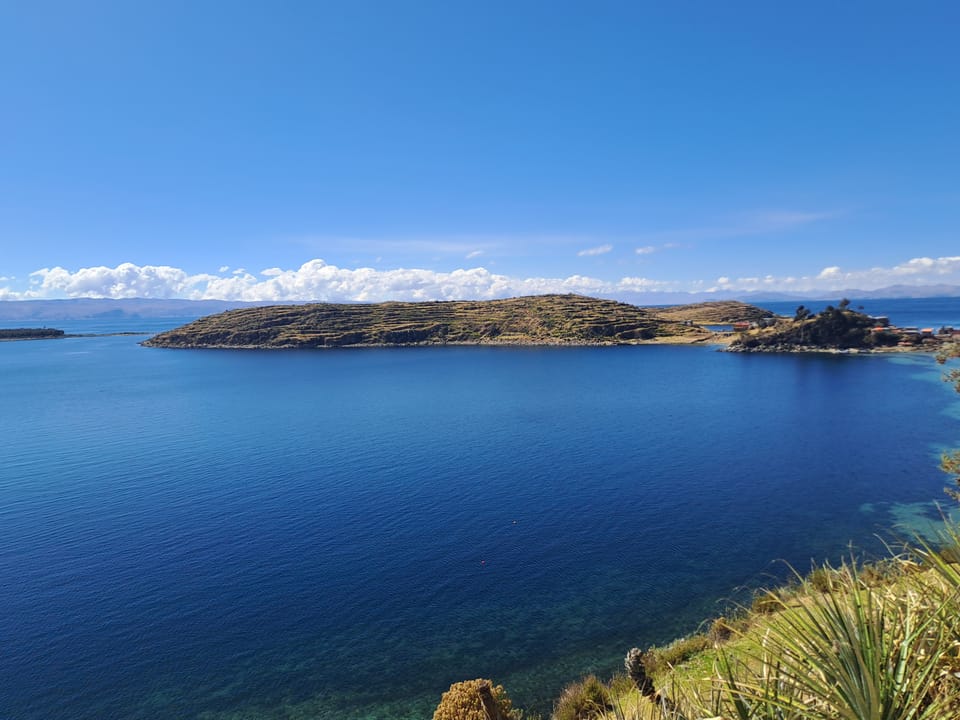
From our accommodation, we walked up to "Cerro Calvario". The path was incredibly dirty, littered with empty bottles and plastic wrappers. Once we reached the top, we enjoyed the view (including the Sun Island "Isla del Sol") and relaxed on the stone steps at the summit "Descanso y Tradición". There were many sales stands with soft drinks and sweets at the pilgrimage site, and an elderly lady tried for about 20 minutes to get the PERFECT selfie of herself and the Virgin Mary statue. The only highlight besides the view was the little hummingbird collecting nectar next to us.


- Mesa Ceremónica
- Roca Sagrada
- Chicana Labyrinth
- Cerro Ticani (from this hill we had a great view, including "Playa de las Gemelas") Then the group split up and everyone (except us) returned to Copacabana the same day. We then walked leisurely up the hill "Ticani" and stopped by these two beaches on the way back:
- Playa de las Sirenas
- Playa Ch‘allaxa de Challapampa
After that, we looked for an accommodation (I had already checked a bit on Google Maps beforehand) and had dinner.


Transportation
In Copacabana, we walked around on foot, and to get to the Sun Island, we logically took the boat. There are no real roads on the island and cars are not allowed. We paid 30 Bolivianos each for the boat ride there and another 30 Bolivianos for the return the next day. Admission to the island cost 15 Bolivianos per person.

Food and Drink
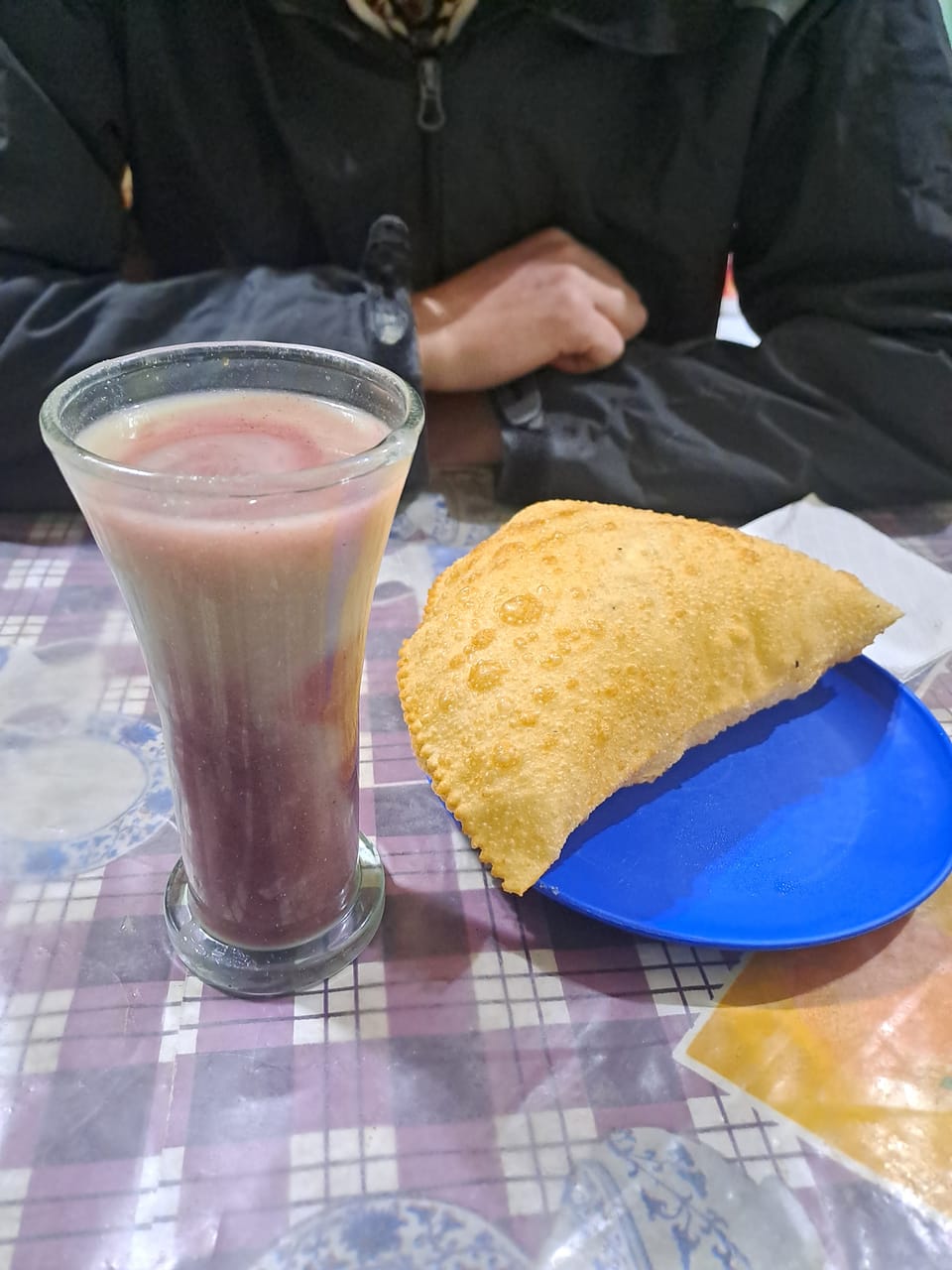
In Copacabana, we ate at "Kiosko Nr. 20 - Titikaka Sagrado". With 118 Google reviews, it achieved the highest rating of 5.0, truly impressive. Pascal ate "the best trout of his life" here. No wonder, it comes directly from Lake Titicaca. I also had trout and the second time, a fried cheese and a traditional soup called "Chairo". At the "Pit Stop", we drank coffee and worked on our blog. Everything was a bit more expensive than usual. It's right next to the terminal after all. And at "Doña Estela" we drank the first (and best) Api of our lives. We also had "Pasteles" and "Buñelos" there. "Linaza Caliente", baguette, Empanadas, chicken, and "Pasankalla" (roasted corn) were bought at smaller stands in the city center. We also ate "Ispi", "Pejerrey", and "Karachi" at the "Pescadería Gaby" and "Pescadería Camila" at the bus station.
Cafés and Restaurants
- Kiosko Nr. 20 - Titikaka Sagrado
- Pit Stop
- Doña Estela
- Pescadería Gaby
- Pescadería Camila
Plants and Animals
On the island, we saw a lot of vegetation. Among others, we saw these plants:
- Bolivian torch cactus (Echinopsis lageniformis)
- Clinopodium chilense
- Cheilanthes mathewsii
- Baccaris tola
- Shining needlegrass (Stipa Splendens)
- Pale African thistle (Berkheya coriacea)
- Lupinus altimontanus
- Blue eucalyptus (Eucalyptus globulus) There weren't many animals to be seen, but we did cross a few sheep herds and spotted some alpacas.
Number of Germans in the City
No sightings, but a few foreigners were around. Luckily, we were traveling in the off-season and there were quite a few people on-site.
Interaction with Locals
We chatted a bit with our receptionist, who also sold us the ticket to Isla del Sol.
People Met
We first met the Frenchman on Isla del Sol, whom we later met again in the minibus to La Paz and at the base camp of "Huayna Potosí".
Expenses
- 160 Bolivianos for both SIM cards
- 15 Bolivianos for a delicious fish dish (Karachi)
- 25 Bolivianos for fish with noodles and potatoes (Ispi and Pejerrey)
- 5 and 3 Bolivianos for toasted corn "Pasankalla"
- 60 Bolivianos for two trout at the harbor and 10 Bolivianos for two liters of water
- 5 Bolivianos for the "Chairo" soup
- 25 Bolivianos for fried cheese
- 6 Bolivianos for Api with Pastel
- 6 Bolivianos for Api with Buñelo
- 4 Bolivianos for Api
- 5 Bolivianos for a baguette "Maraceta"
- 9 Bolivianos for nine very dry cheese Empanadas
- 2 Bolivianos for a drink "Refresco de Gisa"
- 3 Bolivianos for a drink "Linaza Caliente"
- 20 Bolivianos for our guide named Porfirio
- 15 Bolivianos for a coffee and a tea on the island
- 60 Bolivianos per person for the boat trip to the island and back
- 15 Bolivianos per person for the entrance to the island
- 70 Bolivianos for accommodation on the island
- 115 Bolivianos per night in Copacabana (three nights in total)
Standard Stall Offer
The same as on the Peruvian side of Lake Titicaca.
Laundry
We had our laundry washed for 75 Bolivianos at our hostel.
Unsolvable Mysteries
Why are so many hotels for sale in Copacabana?
Currency
From our last stay in Bolivia, we still had a few Bolivianos, and we withdrew money for free at "Banco Fie". The approximate exchange rate: 1 Euro = 7.712 BOB 1 BOB = 0.13 Euro
Bus to La Paz
For the minibus to La Paz, we paid 25 Bolivianos per person. It took about three hours, and funnily enough, the Frenchman who ate at the same restaurant as us on the Sun Island was sitting behind us. In La Paz, the final stop was near the cemetery; we took a taxi to the center with inDrive.
Post Scriptum
This time there are even two albums. One for Copacabana https://hoenisch.eu/photo/mo/sharing/rYEzmQ8np and one for Isla del Sol https://hoenisch.eu/photo/mo/sharing/YsudfDQJ8